



Moving to another state means changing more than your address. If you hold a commercial driver’s license, you will also need to transfer your CDL to your new state.
A CDL does not automatically follow you from one state to another. Once you establish your new home, you must apply for a CDL through the driver licensing agency in that state. The exact process varies, but most CDL transfers involve proving residency, providing identification, updating your medical information and surrendering your old license.
Does a CDL Transfer From State to State?
Your driving qualifications and history remain part of your record, but the physical CDL is issued by your state of domicile. Your state of domicile is the state where you have established your permanent home.
When you move, you must apply for a new CDL from your new state. You cannot keep active driver’s licenses from two states at the same time. The new state will require you to surrender your previous license before it issues the replacement.
The new state will also review your information through the Commercial Driver’s License Information System and the National Driver Registry. These systems help states confirm that a driver does not hold multiple licenses and is not disqualified from driving in another state.
How Long Do You Have to Transfer Your CDL?
Federal regulations require CDL holders to apply for a license in their new state within 30 days of establishing domicile there.
Do not assume that you can wait until your current CDL expires. Starting the process quickly can help you avoid problems with your driving privileges or your ability to work.
A state may also have its own instructions about appointments, documentation and processing. Check with the Department of Motor Vehicles or other driver licensing agency in your new state as soon as you know you are moving.
How to Transfer a CDL to Another State
Although the details vary, the following steps may be common when transferring a CDL.
1. Establish Residency in the New State
Before receiving a CDL, you will need to show that the new state is now your permanent home.
Proof of residency may include:
- A lease or mortgage document
- Utility bills
- Bank statements
- Government correspondence
- Tax documents
- Other mail showing your name and new residential address
The state may require more than one document from different sources. A post office box normally does not count as a residential address.
2. Contact the New State’s Licensing Agency
Visit the website for your new state’s DMV, Registry of Motor Vehicles or equivalent agency. Look specifically for instructions on transferring an out-of-state commercial driver’s license.
Some states require an appointment at a CDL service location. Others may allow you to begin the application online but may still require an in-person visit to complete the transfer.
Review the requirements before your appointment. Missing one document could mean making another trip.
3. Gather the Required Documents
Although every state has its own checklist, you may need to provide:
- Your current out-of-state CDL
- Proof of identity
- Proof of U.S. citizenship, lawful permanent residency or other qualifying status
- Proof that the new state is your state of domicile
- Your Social Security number or acceptable verification
- CDL self-certification information
- Medical certification information, when required
- The names of every state where you held a driver’s license during the previous 10 years
- A completed CDL application
- Payment for the transfer and licensing fees
Federal regulations require CDL transfer applicants to provide proof of domicile and identify the states where they were licensed during the previous 10 years.

4. Update Your Medical Certification
CDL holders must certify the type of commercial driving they perform. Drivers who operate in non-excepted interstate commerce generally must maintain a valid medical certification from a certified medical examiner.
Confirm that your medical information is current and available to your new state. A missing or expired medical certification can delay the transfer or lead to a downgrade of your commercial driving privileges.
Medical reporting procedures have also changed in some states as electronic reporting through the National Registry has expanded. Check the current instructions from your new state instead of relying only on a paper medical card.
5. Surrender Your Previous License
Your new state must collect your out-of-state license before issuing a new one. You cannot keep one license for personal driving and another for commercial driving.
A CDL serves as your driver’s license for both commercial and personal vehicles. You can still drive your personal car, but traffic violations in any vehicle may affect your commercial driving privileges.
6. Complete Any Required Testing
A driver with a current, valid CDL may be able to transfer the same CDL class without repeating the full knowledge and skills testing process. However, testing requirements can vary by state and by the condition of the license.
You may need additional testing when:
- Your CDL has expired
- Your license is lost and cannot be verified
- You are changing or upgrading your CDL class
- You are adding an endorsement
- Your previous testing or licensing record cannot be confirmed
- The new state requires an examination for a particular endorsement
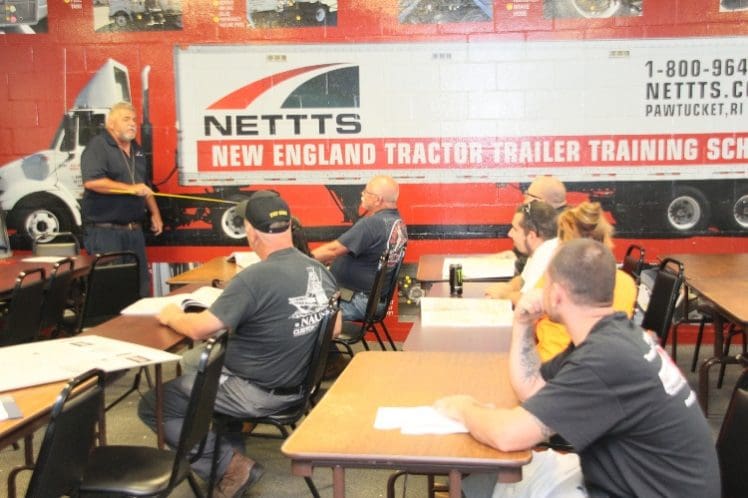
For example, Connecticut allows qualified drivers to transfer an equal CDL class without retesting, although applicants must complete a vision test and meet the state’s other requirements.
Will Your CDL Endorsements Transfer?
Some endorsements may carry over, but others may require additional steps.
The hazardous materials endorsement usually requires the most attention. To retain or obtain a HazMat endorsement, drivers must meet Transportation Security Administration requirements and any additional requirements established by the new state.
Massachusetts, for example, states that an out-of-state HazMat endorsement is not transferable. Drivers must apply for the endorsement in Massachusetts and complete the required process.
Passenger, school bus, tanker and other endorsements may also be handled differently depending on the state. Ask the licensing agency to confirm which endorsements will appear on your new CDL and whether you need additional forms or tests.
Can You Transfer a Commercial Learner’s Permit?
A commercial learner’s permit may not transfer in the same way as a full CDL. If you move while holding only a CLP, contact both states before relocating.
You may need to apply for a new permit in your new state. Depending on your situation, this could affect your testing timeline or require you to provide proof that you completed applicable Entry-Level Driver Training.
Do not assume your permit or scheduled skills test will remain valid after the move.
What Happens if Your License Is Suspended?

Moving to another state will not clear a suspension, revocation or CDL disqualification.
States review CDLIS, the National Driver Registry and records from states where you were previously licensed. A new CDL generally cannot be issued while your driving privileges are suspended or while you are otherwise disqualified.
Be honest and complete when providing your driving history. Leaving out a previous license or disqualification can create additional problems with your application.
Should You Tell Your Employer About the Transfer?
Tell your employer when your license number or state of issuance changes. Your employer may need to update its driver qualification records, insurance information and other employment documents.
You should also confirm that your new CDL contains the correct:
- License class
- Endorsements
- Restrictions
- Medical certification status
- Name and address
Review the license as soon as you receive it so errors can be corrected before they interfere with your work.
CDL Transfer Checklist
Before visiting your new state’s licensing agency, make sure you have:
Preparing ahead can make the transfer process easier and reduce the chance of delays.
Preparing to Earn a CDL
Transferring a valid CDL is different from earning one for the first time. New drivers must meet their state’s permit and testing requirements and complete applicable Entry-Level Driver Training through a provider listed on the FMCSA Training Provider Registry.
NETTTS offers Class A and Class B CDL training at campuses in Bridgeport and Somers, Connecticut; Haverhill, Massachusetts; and Pawtucket, Rhode Island. Training combines classroom instruction with hands-on practice designed to help students prepare for the state CDL skills test.
Contact NETTTS to learn more about CDL training and the steps involved in getting started.